
Psychological Architecture: Existential Room Theory

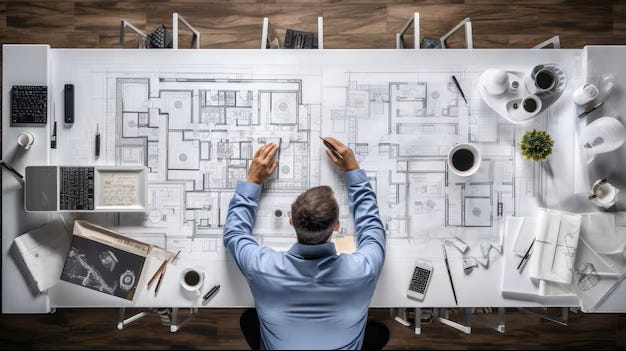
Rooms aren’t just spaces we inhabit- they’re the fundamental architecture of consciousness itself. Every moment of human experience occurs within a “room,” a dynamic structure created by the interplay of our mind, our environment, and what we expect to find there. These rooms aren’t metaphors; they’re the invisible framework that shelter every thought, feeling, and action. We line the walls with the fundamental information of consciousness itself. Understanding rooms is understanding how we construct reality itself, moment to moment.
The Recipe of Reality
Before we walk into any room we lead with expectation. The physical room is painted corner to corner with it: expectation of mood, allowance and limitation, and more. Once in, the mind engages with the space, the room’s physical and social boundaries take hold. Previous expectations become confirmed or altered.
This trio- mind, room, expectations- forms the irreducible structure of all human experience. It’s so basic that denying it is like denying you have thoughts.
Why It Matters
Rooms cut infinite reality into digestible pieces. Without walls- physical or psychological- infinity would overwhelm us completely, turning our minds into dustbowls. To be human is to exist within a sequence of rooms, each granting us permission to be a particular version of ourselves. Our identities feel multiple because our rooms are multiple.
Think about it: you’re different in a courtroom than a bedroom, different in a childhood home remembered than a hotel room entered for the first time. These aren’t just changes in behavior- they’re changes in allowed reality interface.
The Room and Memory
Rooms are memory containers. That’s why hearing a song can instantly transport you back- the music reopens the room where you first heard it. Re-entering a physical space means re-entering the state of mind you last had there. The childhood bedroom still holds the child-self within its walls, waiting to be reactivated by return.
The Manipulation Factor
Here’s where it gets unsettling: if rooms structure our experience, then controlling rooms controls consciousness. Targeting programs, toxic relationships, cults- can all work by room manipulation. They don’t need to directly attack your mind when they can simply redesign the room you inhabit, tightening the walls until the shape of your thoughts conforms to their design.
Most people welcome this confinement because rooms offer safety against absolute possibility. The terror of having no structure at all is greater than the frustration of having too much.
The Doorways
If rooms can be constructed, they can be deconstructed. If walls can be moved, they can be moved in both directions. Recognizing the room doesn’t dissolve it immediately, but it opens the proverbial door to a new floor plan.
A life is not one continuous self, but many rooms walked through. Each with its own set of expectations, each with its own permissions, each with its own limitations. Recognition of them can empower architectural inclinations.
Very interesting. I want art and books everywhere until it’s chaos!